Ideas
IdeasIndustry Media
Broadpeak Executive Maps a Performance-Driven Future for TV Advertising
Xavier Leclercq says standardized interactive formats and cross-industry partnerships can connect television’s reach with measurable consumer action.
Broadpeak strategy chief Xavier Leclercq argues that standardized pause, overlay, squeeze-back and shoppable ads can help television compete for performance budgets without disrupting viewers.
Television advertising must evolve from selling audience reach alone toward formats that can also demonstrate engagement, purchases and other consumer actions, according to Xavier Leclercq, chief strategy and partnership officer at Broadpeak. In a September 4 TVNewsCheck commentary, Leclercq outlined a strategy built around interactive formats, common technical standards and partnerships among broadcasters, operators, retailers and technology providers.
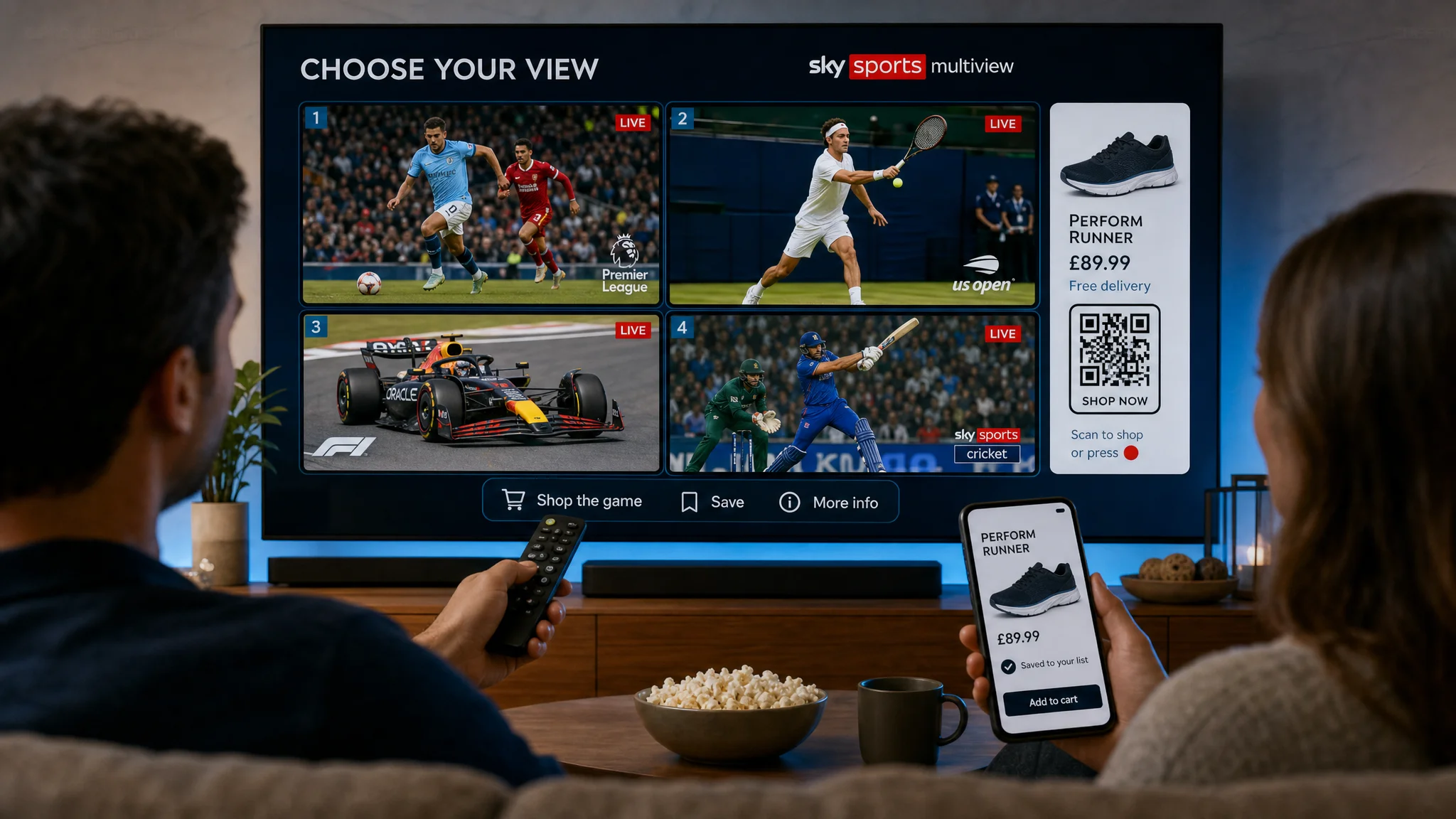
The shift responds to audiences moving among broadcast television, streaming services and social media rather than relying on one platform or provider. Leclercq said this behavior, initially associated with younger viewers, now extends across nearly every demographic. Live sports illustrate the change: Sky’s Your Multiview lets viewers select as many as four live Sky Sports events on one screen, while ESPN offers a similar four-event experience through its app.
For advertisers and television distributors, the challenge is adding measurable commercial opportunities without making viewing more disruptive. Leclercq pointed to overlays, L-banners, squeeze-back advertising and pause ads as alternatives to simply expanding conventional commercial breaks. Shoppable advertising can connect exposure with action, but he argued that interactions should remain simple—such as one remote-control click to save a product, add it to a cart or request information on a phone—because television remains primarily a lean-back medium.
The IAB Tech Lab’s CTV Ad Portfolio is central to making that approach scalable. It standardizes six connected-TV formats, including pause, overlay and squeeze-back ads, creating a shared framework that broadcasters and streaming platforms can deploy more consistently across devices. Roku has already pursued interactive advertising through partnerships with Shopify and Instacart. Fubo introduced programmatic shoppable pause ads designed to let viewers engage without interrupting programming, while France’s TF1 implemented spot-level addressable advertising in live streaming to improve relevance and increase inventory value. (tvnewscheck.com)
Leclercq’s proposed model assigns distinct roles across the television commerce chain: broadcasters provide programming and audience relationships; operators supply distribution and device reach; retailers contribute transaction data; and technology providers connect the systems. ConsumerEXP analysis: The strategy matters because it positions television to compete for performance budgets now flowing to search, social and retail media, while preserving TV’s scale and avoiding heavier ad loads that could drive viewers away.
Footnotes
Articles used to create this Fact Brief
Continue reading