Ideas
Home Shopping and DRTV
Fox Absorbs Roku, Then Roku Narrows Its Hardware Focus to Streaming
The $22 billion deal combines Roku’s connected-TV platform with Tubi and Fox One as consolidation reshapes distribution and advertising.
Roku is leaving smart-home hardware as new owner Fox concentrates Roku, Tubi and Fox One around connected-TV distribution and advertising, while Skydance faces a similar integration challenge after buying Warner Bros. Discovery.
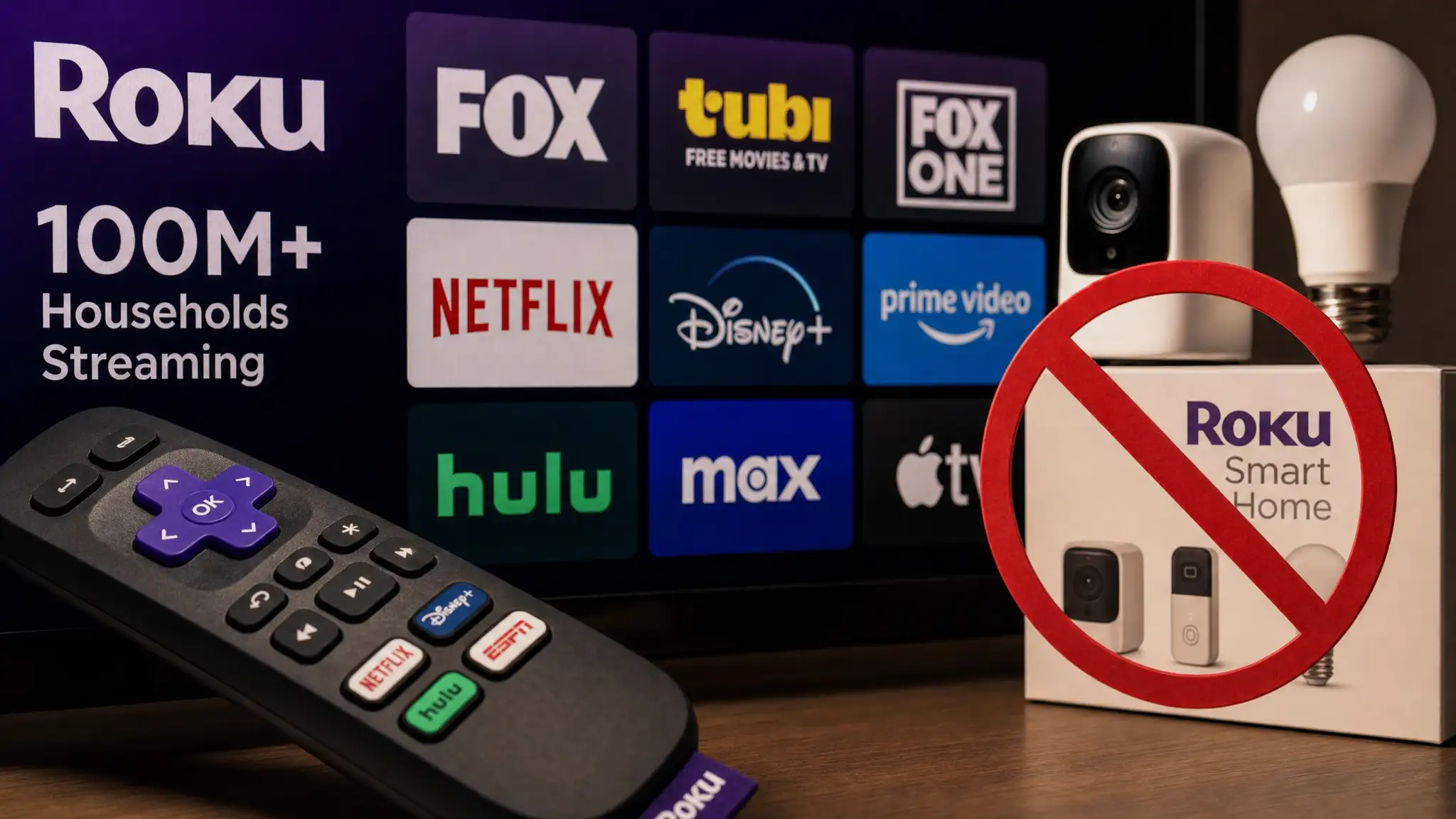
Roku is ending its four-year push into smart-home hardware, a move disclosed less than a week after Fox Corporation completed its $22 billion acquisition of the connected-TV company. Roku said it will wind down sales of security cameras, video doorbells, connected lighting and other household devices while continuing support and services for existing Roku Smart Home products. The withdrawal had been underway for months and predated Fox’s ownership, making the timing coincidental rather than a confirmed post-merger directive. Roku has not said how many smart-home customers are affected or how long software updates and subscription services will continue. (thedesk.net)
The decision nevertheless clarifies which assets sit at the center of the combined Fox-Roku strategy. Fox closed the acquisition on November 6, paying Roku shareholders $95.30 in cash and 0.9799 Fox Class A shares for each Roku share. Former Fox shareholders own approximately 74% of the combined company, while former Roku shareholders hold about 26%. Roku now operates within the newly created Fox Digital Platforms division alongside Tubi, Fox One and Red Seat Ventures. Roku founder Anthony Wood joined Fox’s board and became co-chair of the division with Paul Cheesbrough, its co-chair and CEO. (investor.foxcorporation.com)
Fox says Roku’s open platform, which reaches more than 100 million households, will continue carrying competing streaming services and content providers. That commitment is material to programmers, advertisers and commerce businesses that depend on Roku for app distribution, audience access and connected-TV inventory. Fox expects approximately $400 million in annualized cost savings within two years, but it has not publicly allocated those savings among technology, advertising, staffing or vendor contracts. (investor.foxcorporation.com)
A parallel consolidation at Skydance shows the financial pressure behind these platform combinations. Skydance’s third-quarter results covered the period ending September 30, before its October 6 acquisition of Warner Bros. Discovery. Revenue rose 4.6% to $7.03 billion, driven partly by 10.7% direct-to-consumer growth, while TV Media revenue fell 6.7% and TV advertising declined 8%. Paramount Plus reached 82.2 million subscribers, but the acquired company subsequently carried approximately $87 billion in gross debt and planned at least $6 billion in annual expense reductions within three years. (thedesk.net)
ConsumerEXP analysis: Fox’s ownership of Roku and Roku’s independently planned hardware retreat point in the same strategic direction—concentrating capital and management attention on streaming distribution, advertising technology and recurring digital revenue. For television sellers and media buyers, the practical question is whether Fox preserves neutral platform access while integrating its own programming, ad inventory and commerce opportunities more tightly into Roku.
Footnotes
Articles used to create this Fact Brief
Continue reading