Ideas
IdeasIndustry Media
Samsung’s 2026 OLED TVs Again Skip Built-In ATSC 3.0 Tuners
The omission complicates NextGen TV reception for antenna viewers and limits broadcaster access to premium television buyers.
Samsung’s 2026 OLED lineup, including the flagship S95H, again omits built-in ATSC 3.0 reception. The decision leaves NextGen TV viewers needing external hardware and creates another adoption obstacle for broadcasters.
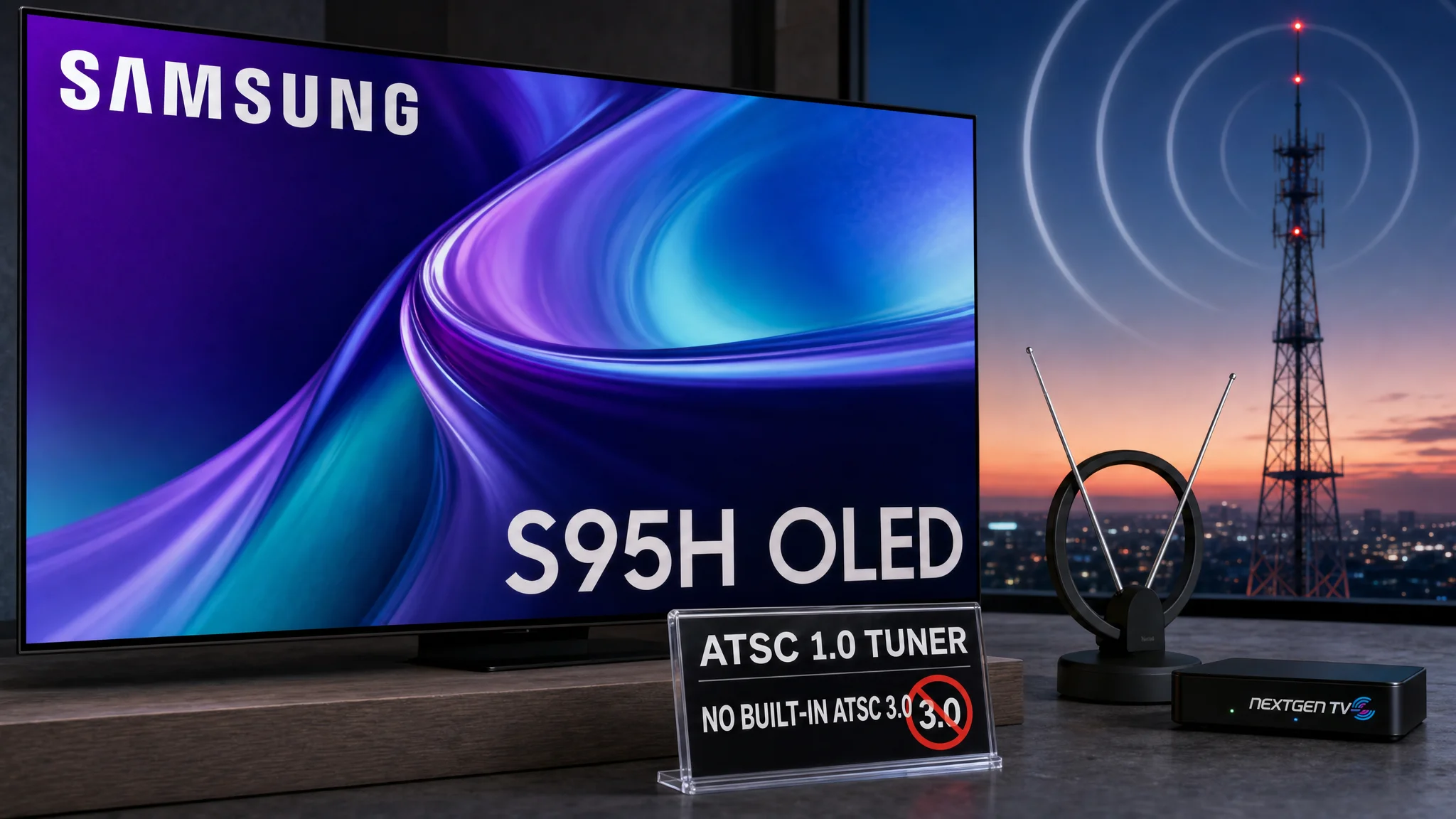
Samsung Electronics is again leaving ATSC 3.0 tuners out of its OLED television lineup, meaning buyers of its 2026 premium OLED sets will not receive built-in access to NextGen TV broadcasts. Cord Cutters News reported the decision on a page dated February 19, 2026—not August 5, 2026, as stated in the supplied source metadata—and identified the flagship Samsung S95H as one model continuing the omission. Samsung’s announced 2026 OLED range consists of the S95H, S90H and S85H series. Independent reviews of the S95H subsequently confirmed that it carries an ATSC 1.0 tuner rather than ATSC 3.0. (cordcuttersnews.com)
The decision extends Samsung’s retreat from built-in NextGen TV reception in OLED sets for a third model year. Samsung stopped including ATSC 3.0 tuners in its OLED televisions beginning with the 2024 lineup, continued the omission in 2025 and has now maintained that position for 2026. Cord Cutters News connected that pullback to patent-licensing disputes and the cost and complexity of supporting the newer broadcast standard. Samsung has not abandoned ATSC 3.0 across its entire television portfolio: the report said selected Neo QLED models still provide built-in support. (cordcuttersnews.com)
ATSC 3.0, marketed as NextGen TV, is designed to support features including 4K video, high dynamic range, improved audio, interactive services and more capable emergency alerts. For antenna viewers purchasing a 2026 Samsung OLED, receiving those broadcasts will instead require a separate compatible tuner from suppliers such as ADTH or ZapperBox. That adds another device, additional setup and expense to a television positioned at the premium end of Samsung’s consumer lineup. The sets can still receive conventional ATSC 1.0 broadcasts. (cordcuttersnews.com)
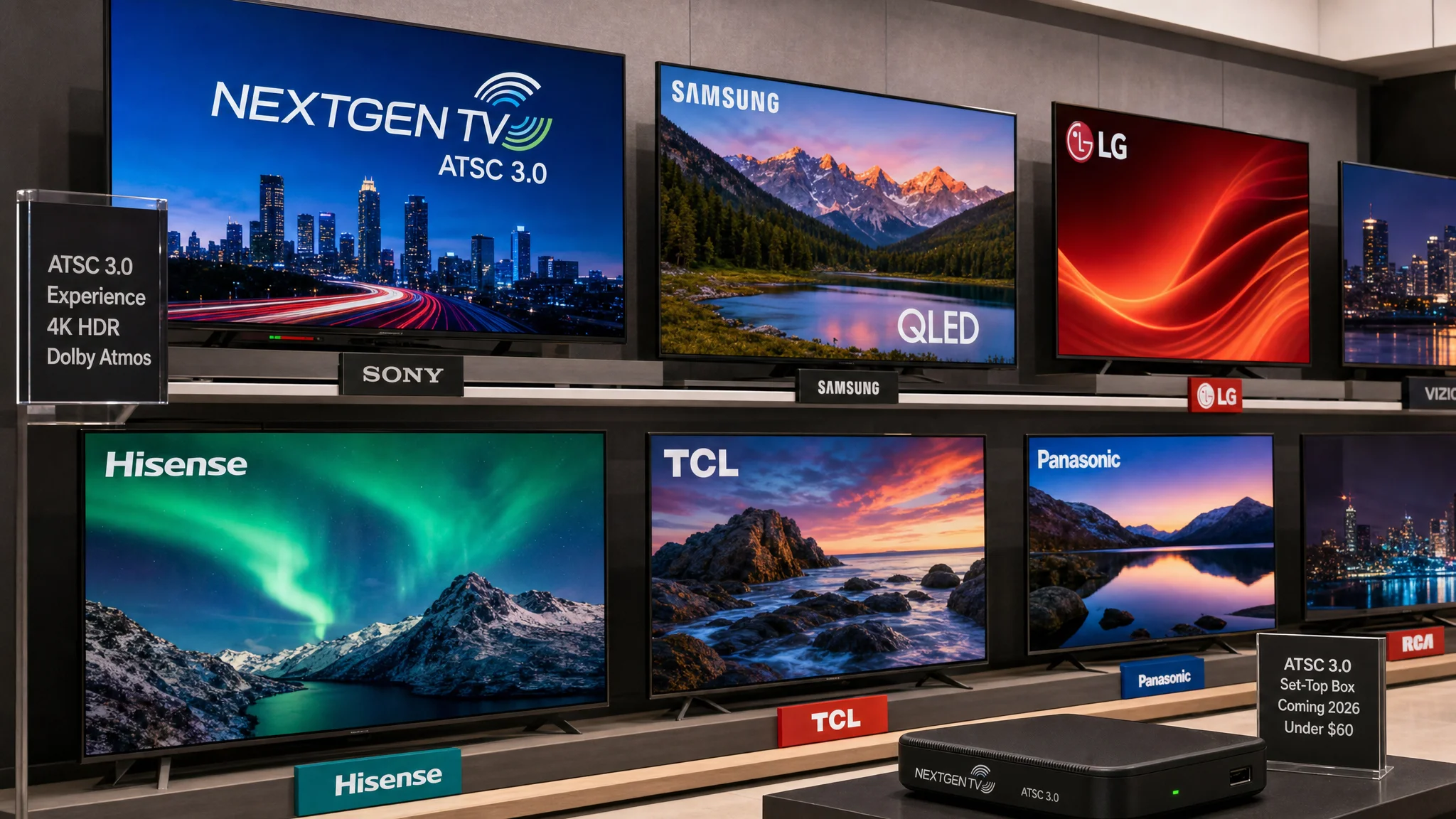
LG Electronics previously removed ATSC 3.0 from its U.S. televisions beginning with the 2024 model year following a patent dispute, while Sony and TCL have generally limited support to selected higher-end products. Samsung’s continued OLED omission therefore narrows the number of prominent premium TVs that can receive NextGen TV without external hardware. (cordcuttersnews.com)
ConsumerEXP analysis: The immediate significance is distribution friction. Broadcasters can deploy ATSC 3.0 signals, interactive programming and addressable advertising capabilities, but those services cannot reach a household through NextGen TV unless the television or an attached receiver contains a compatible tuner. Samsung’s decision keeps one major premium display category outside that built-in reception path.
Footnotes
Articles used to create this Fact Brief
- Samsung Again Stops Selling ATSC 3.0 Tuners In Its OLED TVscordcuttersnews.com
Continue reading