Ideas
IdeasIndustry Media
WBNX Cleveland Switches To ATSC 3.0 Using Silicondust Certificate Authority: A New Competitive Fault Line
Cleveland’s NextGen TV launch puts certificate resilience and supplier choice at the center of broadcast reception reliability.
Nexstar’s WBNX moved to ATSC 3.0 using Silicondust’s certificate authority, giving broadcasters a live alternative for securing and validating NextGen TV signals.

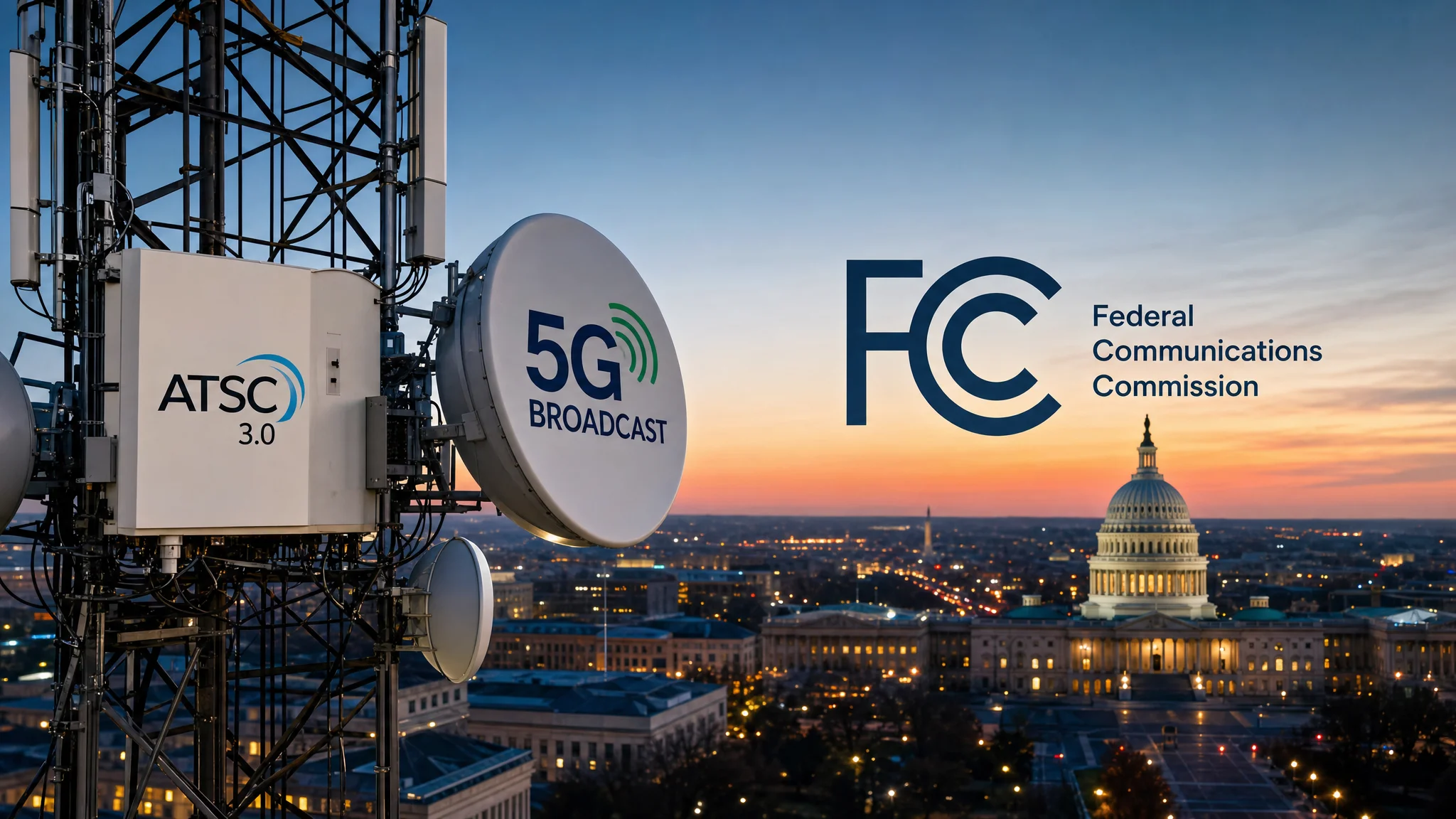
Nexstar Media Group’s WBNX, the CW affiliate serving Cleveland-Akron, Ohio, shifted its over-the-air transmission from ATSC 1.0 to the ATSC 3.0 NextGen TV standard on July 22, 2026. Beyond the format change, WBNX selected signal-signing certificates from Silicondust USA, creating a notable competitive test in the security infrastructure supporting ATSC 3.0 broadcasting.
ATSC 3.0 requires broadcasters to digitally sign their transmissions. If a receiving device cannot validate a station’s certificate during a network disruption or another unusual event, some televisions may reject the channel. Silicondust said its ATSC3CA certificate service and Online Certificate Status Protocol, or OCSP, cloud infrastructure are designed to reduce that risk. The company’s system uses thousands of edge-node responders across more than 30 U.S. data centers, backed by conventional redundant servers.
Silicondust President Nick Kelsey said broadcasters need ATSC 3.0 security that will operate throughout emergencies. According to Kelsey, the company’s OCSP architecture is intended to keep certificate validation functioning during outages affecting either a station or the wider internet. Silicondust also said certificates issued by its ATSC 3.0 Certificate Authority satisfy the standard’s requirements without requiring broadcasters to sign a contract with the A3SA or another party.
Heartland Video Systems handled key implementation work for WBNX. The integrator said it designed the station’s redundant ATSC 3.0 system, sold and configured the equipment, tested the system in its laboratory, commissioned the installation and supported the launch. Heartland also designed the modulation and coding configuration to accommodate robust bit rates, datacasting and linear television service at ATSC 1.0 carrier-to-noise levels. Joe Turbolski, Heartland’s director of sales, said Silicondust’s OCSP product helped enable faster and more reliable over-the-air delivery.
ConsumerEXP analysis: WBNX’s choice turns certificate authority into a visible point of competition rather than an obscure technical component. Broadcasters and equipment vendors now have a live station deployment against which to assess Silicondust’s claims about resilience, implementation speed and contractual independence. For viewers, the immediate issue is less the identity of the certificate provider than whether compatible televisions can validate WBNX reliably, particularly when communications networks are under stress.
Footnotes
Articles used to create this Fact Brief
Continue reading