Ideas
IdeasHome Shopping and DRTV
Vibe Pitches Streaming TV as the Third Customer-Acquisition Pillar Beyond Paid Social
The CTV platform says CRM targeting and cross-channel attribution can turn television advertising into measurable performance media.
Vibe argues that streaming TV can complement search and paid social by combining CRM audience targeting with Northbeam, Triple Whale and Haus Analytics measurement. Case studies involving Shinesty and Sijo Home illustrate the platform’s acquisition pitch and its attribution risks.
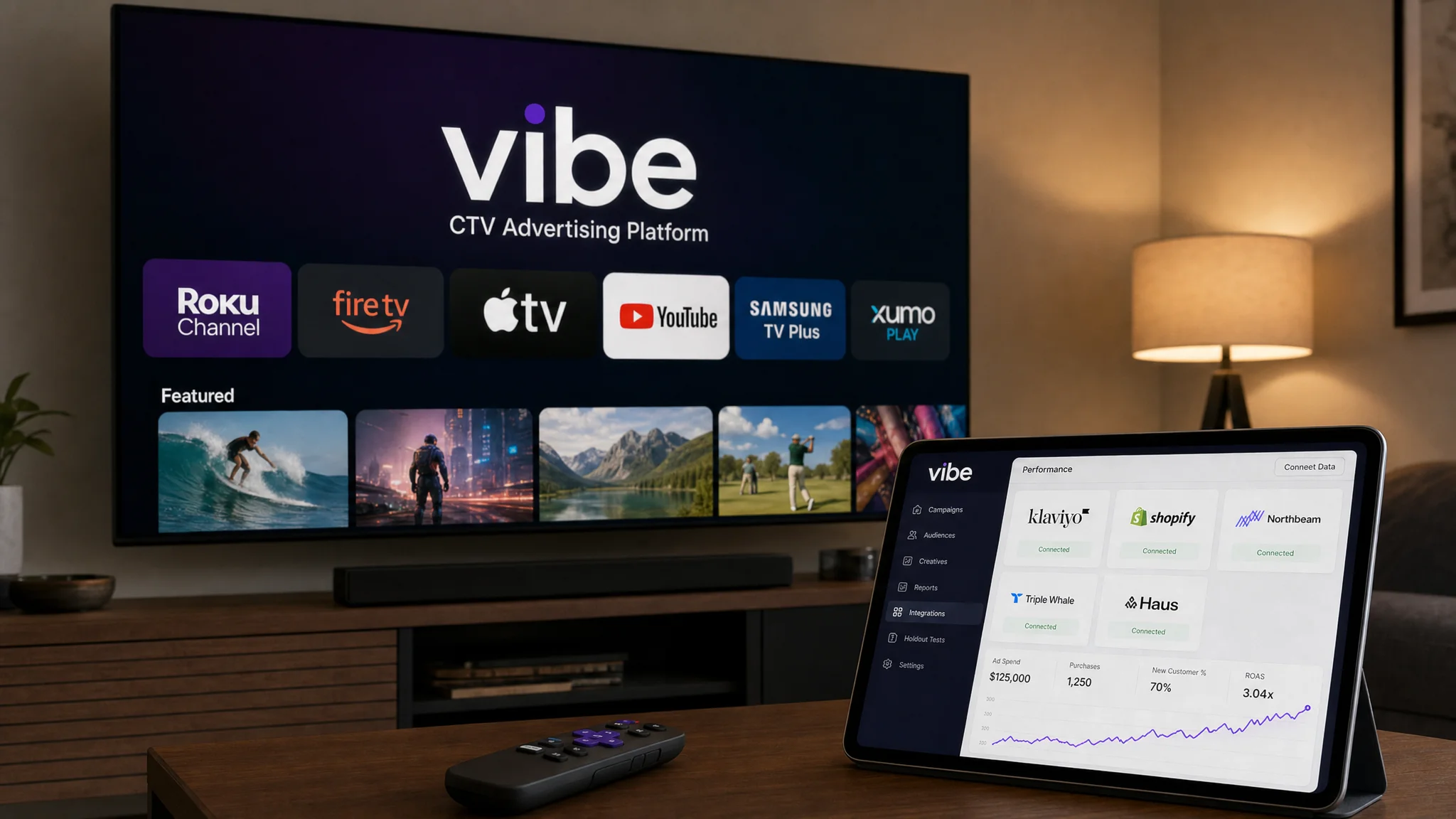
Vibe is positioning streaming television as a primary customer-acquisition channel for performance marketers seeking growth beyond increasingly saturated paid-social campaigns. In an August 31, 2026 report, the self-serve CTV advertising platform argued that search advertising and streaming TV are the two principal alternatives for reaching new customers, while email primarily converts people who already know a brand.
The distinction rests on where each channel operates in the purchase journey. Vibe said Google and Bing capture existing intent from consumers already searching for a product or solution. Streaming TV, by contrast, can introduce a need or brand earlier through full-screen, non-skippable advertising. Retail media may work for brands with a strong presence on commerce platforms, while Vibe characterized audio, display advertising and online-video pre-roll as less consistently attributable at typical budgets.
Vibe presented its platform as infrastructure for bringing CTV into the same operating system used for Meta and Google campaigns. Native Klaviyo and Shopify connections let advertisers use customer segments—including non-purchasers, lapsed buyers and purchaser-suppression lists—for television targeting. Northbeam and Triple Whale integrations place CTV impressions and spending alongside search and social results, while Haus Analytics supports holdout testing intended to determine whether attributed sales were incremental.
Two direct-to-consumer examples support Vibe’s case. Apparel brand Shinesty used Klaviyo to suppress previous purchasers and targeted more than 4 million email subscribers who had not bought. Northbeam’s Clicks + Deterministic Views model tracked the campaign; Vibe reported a CPM below $19, including during the fourth quarter, and said 70% of CTV-driven purchases came from new customers. Home-textiles brand Sijo Home reduced new-customer acquisition cost by 57% compared with paid social and achieved a 304% return on advertising spend, according to Northbeam-verified results cited by Vibe.
Vibe said a meaningful initial CTV test generally requires about $20,000 to $30,000, CRM-matched targeting and a holdout group, although its platform has no annual contract or minimum-spend requirement.
ConsumerEXP analysis: The proposal matters to video-commerce operators because it treats television as accountable acquisition media rather than awareness-only inventory. The principal risk is evidentiary: the performance figures and channel hierarchy come from Vibe’s vendor-authored report and case studies, so advertisers should validate incrementality, attribution windows and customer-acquisition costs independently before shifting substantial budget.
Footnotes
Articles used to create this Fact Brief
Continue reading