Ideas
IdeasHome Shopping and DRTV
Parks Associates: 51% Want Live TV and Streaming Combined
Flexible bundles could help video distributors retain price-sensitive subscribers while preserving access to live programming.
Parks Associates found that 51% of U.S. internet households prefer packages combining live TV and streaming services. Interest in lower-priced skinny bundles was especially high among vMVPD subscribers.
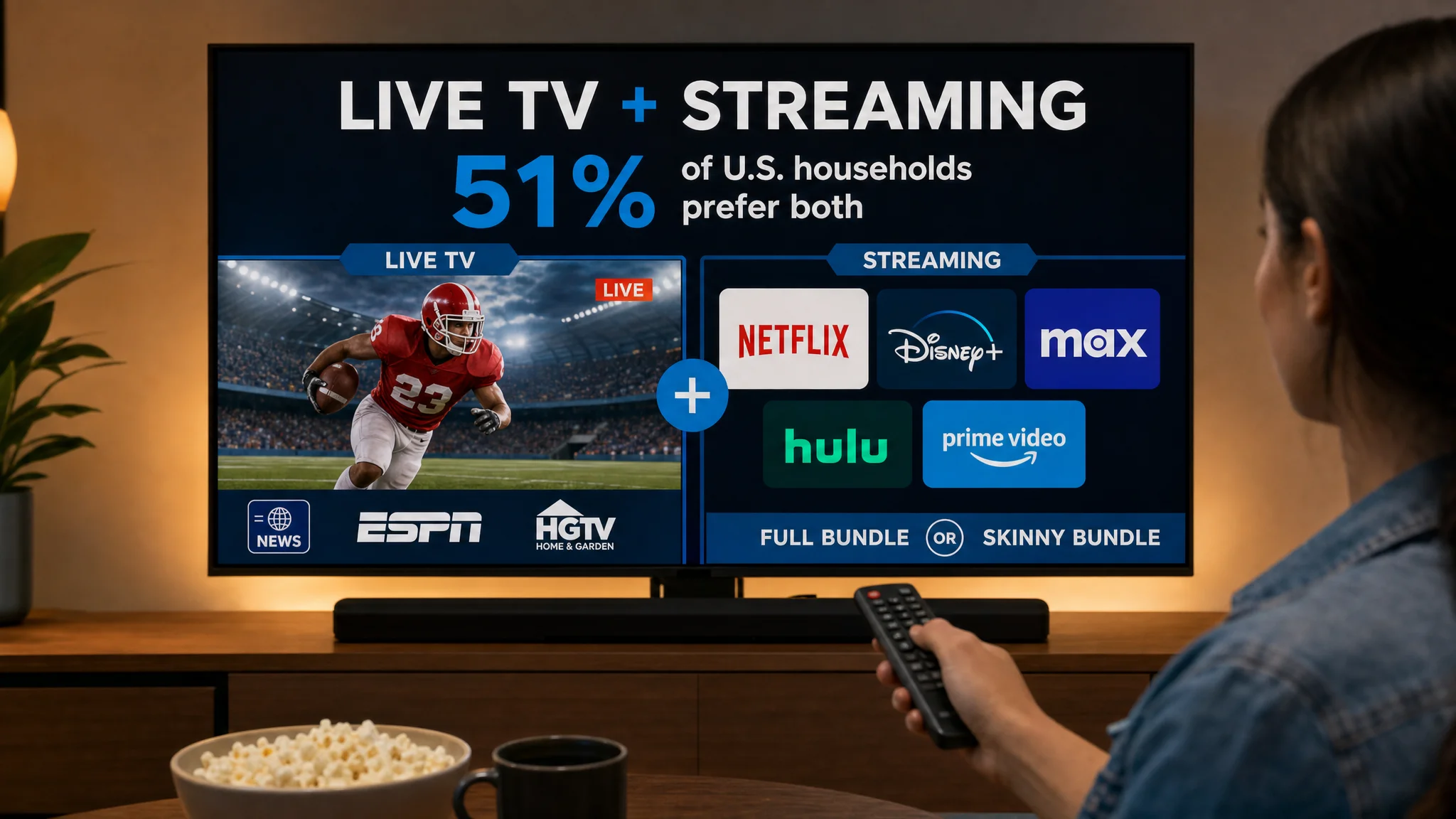
A narrow majority of U.S. internet households prefer a video subscription that combines live television with favored streaming services, according to Parks Associates research highlighted by TVNewsCheck on September 8. The finding gives traditional pay-TV operators and streaming television distributors a potential path for addressing subscriber concerns about package size, price and fragmented access to programming.[1]
The 51% total represents two distinct groups in Parks Associates’ consumer study, “The New Live TV Model: Skinny Bundles, Sports, News.” Twenty-seven percent of U.S. internet households prefer a full live-TV bundle combined with their favorite streaming-on-demand services. Another 24% prefer those streaming services paired with a skinny bundle, TV Technology reported on September 1.[2]
Parks Associates describes a skinny bundle as a lower-priced pay-TV or streaming package containing a limited number of core channels, commonly centered on categories such as entertainment, sports or news. The findings therefore do not show that all 51% want the same product: Some respondents favor a traditional live-TV lineup supplemented by streaming, while others want a narrower and less expensive selection of live channels.
Demand for the smaller-package concept was stronger among consumers already subscribing to virtual multichannel video programming distributors. Parks Associates found that 68% of vMVPD subscribers liked the idea of a skinny bundle. The firm identified YouTube TV, Hulu + Live TV, Fubo and DIRECTV Stream as examples of services used by this audience.[2]
Michael Goodman, director of entertainment research at Parks Associates, said consumers are not necessarily choosing between live television and streaming because many want both formats in one package. He said providers can offer greater flexibility while making valued programming easier to access. Goodman identified retention as the strongest opportunity for skinny bundles: Giving existing subscribers a smaller alternative could keep customers who value live programming but are increasingly sensitive to the cost and breadth of traditional channel packages from canceling entirely.[2]
ConsumerEXP analysis: For television networks, streaming services and commerce programmers, the packaging decision can influence carriage, audience discovery and advertising reach. Distributors that place live channels and on-demand services in one interface may strengthen their customer relationship, but narrower bundles also create competition for limited channel positions. The research measures consumer interest rather than actual adoption, sales or churn reduction; providers would still need to test pricing, channel composition and conversion before treating skinny bundles as a proven retention strategy.
Footnotes
Articles used to create this Fact Brief
Continue reading